

What Happens If Nobody Knows Something Is Wrong? A Van Life Safety Guide
Share this article…
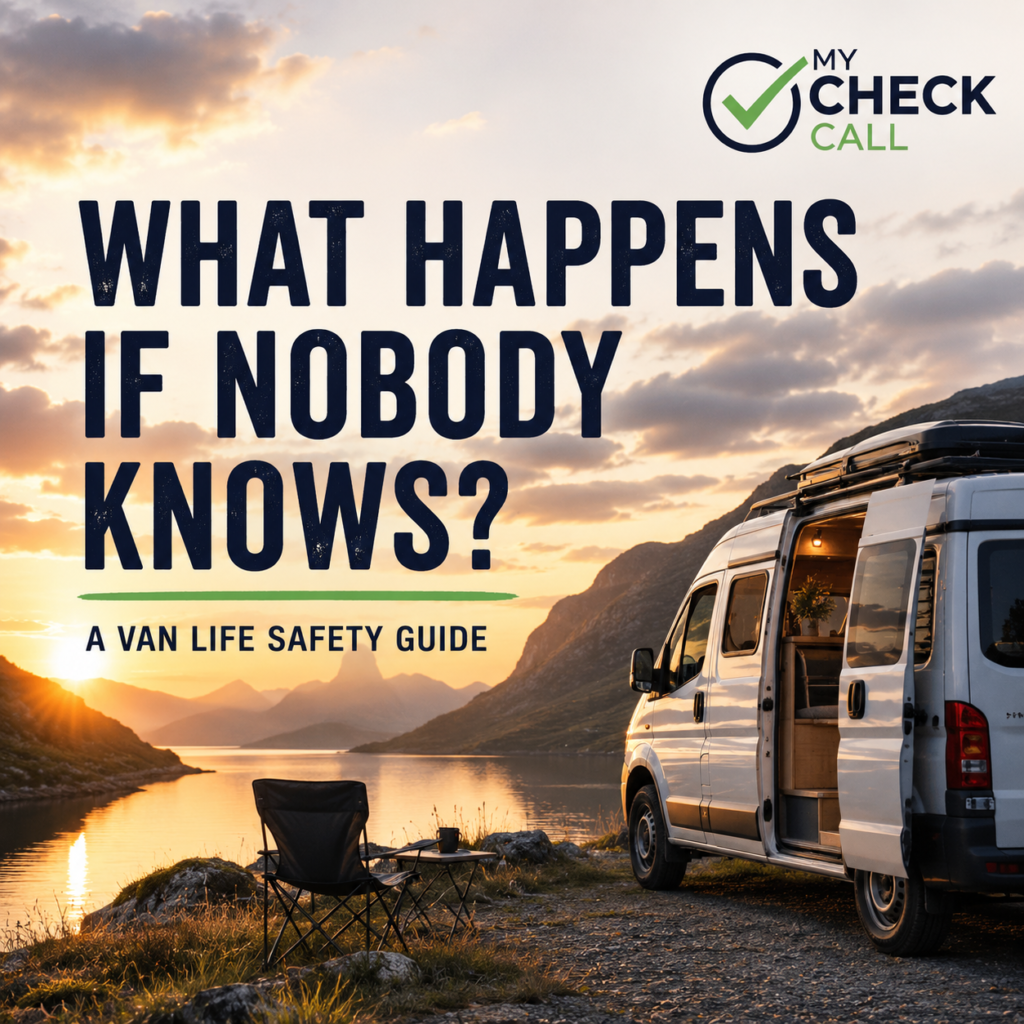
Few lifestyles offer the same sense of freedom as van life.
One day you might be parked beside a quiet beach in Cornwall. A week later you could be watching the sunrise over a Scottish loch or discovering a hidden spot deep within Snowdonia. The ability to choose your destination, change your plans and live life on your own terms is what draws so many people towards life on the road.
For many people embracing full-time van life, that freedom is the whole point. Whether you’re living in a van full time, exploring the UK in a self-converted campervan or travelling wherever the road takes you, the appeal is often the same: more freedom, more flexibility and more control over how you spend your time.
Life on the road offers experiences that simply don’t exist within the routines of everyday life. It allows people to slow down, spend more time outdoors and focus on what matters most to them. Some embrace the digital nomad lifestyle and work remotely from their vans. Others choose campervan living after retirement, while many are drawn to the idea of creating a tiny home on wheels that allows them to explore the country without sacrificing comfort.
Yet that same freedom creates a question that many travellers never stop to consider:
If something unexpected happened tomorrow, who would know?

It’s not the most exciting aspect of van life, and it’s certainly not something people discuss as often as solar panels, diesel heaters or off-grid power systems. However, it’s one of the few risks that applies to almost everyone who spends significant time travelling away from home.
Most journeys are completed without incident, and most van lifers will never experience a serious emergency while travelling. The challenge isn’t how likely something is to happen. The challenge is making sure somebody notices if it does.
The Safety Side of Van Life That Rarely Gets Discussed
Spend enough time in van life groups and you’ll see countless conversations about internet connectivity, overnight parking locations, battery systems, water tanks and the best places to explore. You’ll find recommendations for campsites, water fill-up points and hidden gems that don’t appear in guidebooks.
What you rarely see are discussions about what would happen if somebody became unable to call for help.
Most travellers carry a first aid kit. Many have breakdown cover. Some use location-sharing apps or personal alarms. These are all sensible precautions and can be incredibly useful in the right circumstances.
However, many safety systems share the same limitation: they rely on the person needing help being able to use them.
If somebody suffers a medical emergency, becomes unconscious, experiences a serious fall or simply cannot reach their device, even the best technology may not be enough. In those situations, the issue is not whether a safety system exists. The issue is whether anyone knows that help is needed.
That distinction is easy to overlook until you stop and think about it.
Why Off-Grid Van Life Changes Things
One of the biggest attractions of van life is the opportunity to escape busy towns and cities and spend time in places where life feels a little slower. Whether you’re parked beside a remote beach, tucked away in the Scottish Highlands or exploring the quieter corners of rural Wales, the feeling of being away from it all is often part of the appeal.
Many people choose off-grid van life specifically because it allows them to disconnect from the pressures of everyday life. The ability to park up in a beautiful location, switch off from the noise of modern life and enjoy complete freedom is one of the reasons the van life community continues to grow year after year.
The problem is that being away from it all can also mean being away from immediate support.
A vehicle breakdown is inconvenient, but manageable. Most travellers have a plan for that. A medical emergency is very different.
When you’re hundreds of miles from family and friends, staying somewhere unfamiliar or travelling alone, a simple question becomes surprisingly important:
Who would notice if you suddenly stopped checking in?
For many people, there isn’t a clear answer.
Mobile Data Isn’t Always Available
Anyone who has travelled extensively around the UK knows that mobile coverage can be unpredictable.
One minute you’re streaming music, uploading photos or checking directions. The next, you’re staring at a loading screen while parked beside one of the most beautiful views you’ve ever seen. Most van lifers quickly learn to download maps before travelling and plan around unreliable internet connections because it’s simply part of life on the road.
This becomes particularly important when considering personal safety. Many modern safety applications rely on internet access, mobile data or GPS connectivity. While these technologies can be extremely useful, they are not always available when you need them most.
A scheduled check-in works differently.
With My Check Call, all you need is enough signal to make a phone call. There is no app to open, no internet connection required and no mobile data dependency. If you can make a call, you can complete your check-in.
For travellers who regularly venture beyond areas of reliable data coverage, that simple difference can be incredibly valuable. While mobile data can disappear completely in some locations, a basic phone signal is often still available, allowing travellers to maintain their check-in routine even when internet-based systems become unusable.
Why Panic Alarms Aren’t Always Enough
Personal alarms and emergency devices can play an important role in keeping people safe. When somebody can access them, they provide a fast and effective way of raising the alarm.
The challenge is that not every emergency gives somebody the opportunity to press a button.
A sudden medical episode, a serious fall, confusion, unconsciousness or even something as simple as a phone being out of reach can remove that opportunity entirely.
This is where regular safety check-ins provide a different layer of protection.
Instead of waiting for somebody to ask for help, a check-in system focuses on something else: expected contact. If a traveller completes their scheduled check-in, everything carries on as normal. If they don’t, somebody notices.
That shift in thinking is what makes scheduled check-ins so effective.
Sometimes the most important warning sign isn’t the alarm that was raised.
It’s the one that wasn’t.
A Simple Safety Plan for Full-Time Travel
Experienced travellers prepare for all sorts of situations. They carry spare tyres, emergency supplies, jump starters, first aid kits and recovery equipment. They check weather forecasts, research routes and plan overnight stops.
A check-in plan simply extends that preparation to cover something equally important: yourself.
The concept is straightforward. At agreed times, you confirm that everything is okay. If that confirmation doesn’t happen, a process is already in place to identify the issue and begin escalation.
Most travellers will never need it, and that’s exactly the point.
Good safety planning isn’t about expecting something to go wrong. It’s about making sensible preparations so that you’re covered if it does.
Whether you’re enjoying occasional campervan adventures or embracing full-time travel, having a simple check-in plan can provide reassurance without affecting the freedom that attracted you to the lifestyle in the first place.
More Than Just a Solo Traveller Solution
When people think about travel safety, they often picture someone travelling alone. While solo traveller safety is certainly important, regular check-ins can benefit couples, families and groups too.
Partners often spend time apart during the day. One person might head off for a walk while the other remains at the van. Travellers may separate while exploring a town or attraction. Unexpected situations can happen regardless of how many people are travelling together.
The value of a check-in isn’t necessarily linked to travelling alone.
It’s linked to ensuring that somebody notices when expected contact suddenly stops.
That principle applies whether you’re a solo adventurer, a retired couple touring the country, a family embracing campervan living or a full-time traveller exploring the UK one destination at a time.
The Van Life Community Understands Independence
One of the things that makes the van life community so unique is the sense of independence it encourages.
People choose this lifestyle because they want freedom, flexibility and adventure. They don’t want complicated systems, unnecessary subscriptions or technology that creates more problems than it solves.
At the same time, experienced travellers understand the importance of preparation. They carry tools, recovery equipment and spare supplies not because they expect things to go wrong, but because they know it’s better to have a plan than to need one.
A safety check-in follows the same principle.
It’s not about expecting problems.
It’s about knowing that if something unexpected does happen, somebody will notice.
Real People. Real Safety.
At My Check Call, we believe safety should be simple.
Customers complete a short scheduled check-in call at agreed times. The call takes around 15 seconds and can be made from a mobile phone or landline. If a check-in is missed, our monitoring team receives an alert and follows the agreed escalation procedure.
Behind every missed check-in is a real person reviewing the alert and taking action when necessary. That human element sits at the heart of everything we do. Technology supports the process, but people drive the response.
Unlike many safety solutions, getting started doesn’t require expensive equipment, specialist devices or long-term contracts. Customers simply choose the check-in schedule that suits their lifestyle and complete a short telephone check-in at the agreed times.
We believe flexibility matters, particularly for travellers. Plans change, routes change and sometimes life changes too. That’s why our subscriptions operate on a simple rolling monthly basis, allowing customers to start, pause or cancel the service as their circumstances evolve.
For many travellers, the cost works out at little more than the price of a coffee each month. Considering the reassurance it can provide for both travellers and the people who care about them, it’s a small investment in peace of mind that travels wherever your next adventure takes you.
That’s why our philosophy remains unchanged:
Real People. Real Safety.
While My Check Call currently focuses on supporting travellers within the UK, the same principles apply wherever your adventures take you. As more people embrace long-term travel and life on the road, reliable safety check-ins are becoming an increasingly important part of travel planning, and we’re actively exploring how we can support travellers further afield in the future.
The Best Adventures End With a Safe Check-In
Most people choose full-time van life because they want more freedom, more experiences and more adventure. Whether you’re exploring the UK in a self-converted campervan, embracing off-grid van living or travelling full time around the country, the goal is usually the same: to spend more time enjoying life and less time worrying about it.
Having a safety plan doesn’t take away from that freedom. If anything, it supports it.
Knowing that somebody will notice if expected contact suddenly stops allows you to focus on what really matters: enjoying the journey, exploring new places and creating memories that will last a lifetime.
Whether you’re watching the sunset over the Cornish coastline, exploring the Scottish Highlands or discovering a hidden gem you’ve stumbled across by accident, a simple check-in plan can provide reassurance for both you and the people who care about you.
Because when you’re living life on your own terms, it helps to know that somebody will notice if you don’t check in.
And sometimes, that simple reassurance is the best travelling companion you can have.


